

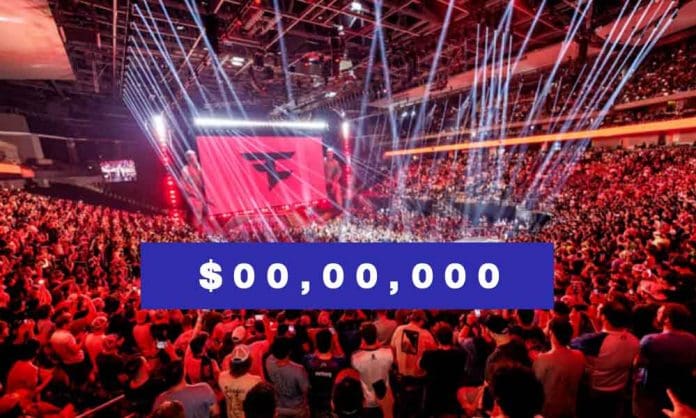

An industry projecting $4.8 billion in global revenue for 2025, with an audience of over 640 million viewers, should not be hemorrhaging talent, shutting down organisations, and watching its most prominent brands collapse.
And yet, that is exactly where esports finds itself. The numbers, on the surface, tell a growth story.
PwC’s Global Entertainment & Media Outlook has tracked esports revenue surging five-fold from $194 million in 2014 to $980 million by 2019, projecting continued double-digit growth through the mid-2020s. PwC’s Strategy& arm, in its 2024 report Passion into Profit, forecast global esports revenue reaching $1.86 billion by 2025 at a 13.4% CAGR. Deloitte’s Let’s Play! 2024 study, surveying over 14,000 respondents across 20 markets, found esports awareness at 94% in Southeast Asia alone, with the broader global audience exceeding 500 million.
But both firms also flag the same underlying tension. PwC notes that while traditional sports properties like the NFL, Premier League, and Bundesliga generate $51, $32, and $11 per individual viewer respectively, the average esports viewer contributes just over $2. Deloitte’s research found that esports teams derive roughly 65% of revenue from core activities like sponsorships and prize money, with limited success diversifying into adjacent streams. The audience is there. The monetisation architecture is not.
FaZe Clan, once valued at $725 million during its 2022 SPAC merger, was acquired by GameSquare for roughly $17 million in late 2023. A 98% decline in valuation. The Overwatch League, Blizzard’s flagship franchise experiment, was dissolved in November 2023, costing Microsoft an estimated $120 million in compensation payouts to its 20 franchise teams. Riot Games cut 530 employees, 11% of its workforce, in January 2024, shutting down Riot Forge and cancelling the Riot Esports Network entirely. Evil Geniuses went through three rounds of layoffs in under a year. 100 Thieves shed 20% of its staff and spun off its energy drink and game development divisions just to stay afloat.
These are not fringe players. These were the industry’s flagship organisations. And the audiences that powered their rise? Still there. Still watching. Still engaged. That is the contradiction at the centre of esports in 2026. The attention economy works. The business model does not.
The Revenue Structure Is the Problem
Strip esports down to its financial core, and the imbalance becomes immediately visible.
Sponsorship and advertising remain the dominant revenue stream, contributing an estimated 60% or more of total esports income at the organisation level. According to multiple industry analyses, sponsorship revenue reached approximately $935 million to $1.1 billion globally in 2025. At the team level, that concentration is even more severe, with some organisations historically deriving 80–90% of their revenue from brand partnerships alone.
That is dependency more, than the delusion of diversification.
The remaining revenue landscape is thin. Media rights account for roughly $500 million, significant in aggregate, but fragmented across publishers, leagues, and regions with no unified distribution model. Merchandise and ticketing combine for approximately $300 million globally, streaming platform revenues contribute a fraction of that.
The one segment showing explosive growth, esports betting, projected at $12.8 billion in 2025, largely accrues to betting operators, not to the teams, leagues, or media companies that produce the content those bets are placed on. It inflates the headline market size without materially improving the financial health of the ecosystem’s core stakeholders.
Compare this to traditional sports, where media rights alone constitute the largest and most predictable revenue stream, often secured through multi-year, multi-billion-dollar deals. The English Premier League’s domestic broadcast rights alone are worth over £6.7 billion across a three-year cycle. The NFL’s media deals exceed $100 billion over their full term. These agreements provide the financial stability that allows leagues, teams, and supporting infrastructure to plan, invest, and grow over decades.
Esports has no equivalent. Not even close.
The Capital Problem Behind the Revenue Problem
Even if the structural problems outlined above were addressed tomorrow, a deeper question would remain. Where does the money actually come from, and what does it cost the industry to accept it? Over the past several years, the most aggressive investors in esports have come from gray sources, gambling-adjacent platforms, cryptos, NFTs and tokens, funds with strategic agendas. Neither represents the kind of capital that builds long-term institutional credibility.
The cryptocurrency era in esports was brief, expensive, and damaging. TSM’s $210 million naming rights deal with FTX collapsed alongside the exchange itself, leaving the organisation financially gutted and reputationally scarred. FaZe Clan’s involvement in crypto promotions drew regulatory scrutiny and public backlash. Across the ecosystem, teams and tournaments accepted sponsorship from exchanges and token projects that, in many cases, no longer exist. The money arrived quickly, and it left even faster, taking trust with it.
What replaced crypto was not markedly better. Gambling and casino-adjacent brands now represent one of the fastest-growing sponsorship categories in esports. Betting revenue alone is projected at $2.8 billion in 2025, making it the single largest segment in many market estimates. But that revenue flows primarily to operators, not to the teams and leagues producing the content. More critically, it raises fundamental questions about audience protection. Esports viewership skews young, and the integration of betting into competitive ecosystems introduces gambling exposure to audiences that include minors.
The concerns are not theoretical. Counter-Strike’s loot box and skin gambling ecosystem has faced sustained legal and regulatory pressure, including proceedings in US courts over whether crate-opening mechanics constitute gambling. The broader sweepstakes and skin-betting economy that has grown around CS2 operates in a regulatory grey zone that multiple jurisdictions are now actively scrutinising. When the primary commercial growth engine for an industry depends on mechanisms that courts and regulators are questioning, the sustainability of that growth becomes difficult to defend.
On the other end of the spectrum sits sovereign-backed investment, most prominently from Saudi Arabia through entities like the Saudi Esports Federation and the Savvy Games Group. The Esports World Cup ($45 million ENC 2026), Riyadh-hosted majors, and direct team investments have injected significant capital into the ecosystem. But this level of concentration carries its own structural risk. When a single external funding source becomes the most reliable provider of large-scale capital in an industry, the ecosystem’s long-term independence becomes a legitimate concern. Dependency on any single source, regardless of origin, introduces fragility of the kind the industry is already trying to move away from.
The result is an ecosystem where the cleanest and most sustainable money, direct consumer spending, brand partnerships from non-endemic sectors with genuine marketing intent, and diversified media rights, remains the hardest to secure. The money that is available tends to come with reputational risk, regulatory uncertainty, or structural dependency.
This leads to another uncomfortable reality that is already reshaping the economics underneath. The broader digital economy has moved decisively toward subscription and rental models, and gaming has followed. Players increasingly own nothing. Game libraries exist on platforms that can revoke access. In-game purchases are licenses, not assets. Content exists behind paywalls that can change terms at any time. For the end consumer, this is the final stage of monetisation extraction, a model where recurring revenue is maximised and ownership is eliminated entirely. There is very little beyond this model left to monetise, which means the ceiling for consumer-side revenue growth may be closer than market projections suggest.
Compounding this is the accelerating role of artificial intelligence across the ecosystem. AI is already being deployed in content creation, game development, analytics, coaching tools, and audience engagement. The early applications are functional, but the trajectory is clear. As AI-generated content scales, the marginal cost of producing esports media, analysis, and even strategic content approaches zero. That has direct implications for the human creators, analysts, and media professionals who currently form the backbone of the industry’s content layer.
The question is not whether AI will be integrated, it will. The question is whether, five years from now, brands will see value in partnering with human creators and teams when AI-driven channels can produce equivalent content at a fraction of the cost and at limitless scale. If the answer shifts even partially, the monetisation model for creators and organisations contracts further, precisely at the moment when the industry needs it to expand.
Against this backdrop, one structural experiment deserves closer examination than it typically received. The Esports World Cup, and the broader competitive framework that Saudi Arabia’s esports infrastructure is attempting to build. From a purely structural standpoint, it represents one of the few models in global esports that provides direct operational funding to organisations, guarantees participation revenue independent of sponsorship cycles, and allows competitive outcomes to be determined on merit within the tournament itself.
That is not a small thing. In an ecosystem where most organisations operate without guaranteed revenue, where participation in competitions often costs more than it returns, and where financial survival depends on external sponsorship that may or may not materialize, a model that provides baseline operational funding and competitive opportunity is structurally significant.
The uncomfortable truth is that esports, as it stands, is caught between money that comes with strings and a future where the value of human participation itself is being questioned. Solving the monetisation crisis requires not just new revenue streams, but cleaner ones, and a credible answer to what happens when the cost of producing content, competition, and engagement continues to fall toward zero.
The Ownership Constraint No One Wants to Address
At the structural core of this crisis lies a constraint that is both fundamental and largely unresolved, esports do not own the product it is built around.
PwC’s analysis identifies this directly, game publishers have historically been reluctant to outsource esports operations to third parties, worried about losing control over intellectual property and facing reputational risk. That reluctance, PwC notes, has resulted in operational complexity, limited economies of scale, and has prevented specialised esports leagues and event organisers from fully exploiting their expertise for growth and monetisation.
Games are intellectual property controlled by publishers. Riot Games decides the format, schedule, and commercial terms of every League of Legends and Valorant competition globally. Valve determines who operates Dota 2 and Counter-Strike 2 events, and on what terms. Epic Games controls the Fortnite ecosystem end to end. Publisher decisions, on game updates, competitive formats, title longevity, or even whether to continue supporting esports at all, can reshape entire competitive ecosystems overnight.
Distribution sits with platforms. Twitch, YouTube, and an emerging set of challengers determine how content reaches audiences, what gets promoted, and how creators and organisations can monetise. Discovery is increasingly governed by algorithms that reward virality and recency over consistency and depth.
Revenue, in most cases, is generated externally, through sponsors whose budgets are tied to marketing cycles, not to the health of the esports ecosystem itself.
The result is an industry where even the most successful organisations operate with remarkably limited control over their own trajectory. Teams cannot guarantee the longevity of the titles they compete in. Tournament organisers negotiate terms set by publishers. Media companies build audiences on platforms they do not own. This is the architecture of the industry. And it has consequences.
When Riot cancelled the Riot Esports Network in 2024, third-party tournament organisers immediately faced increased pressure. When Activision Blizzard dissolved the Overwatch League, franchise owners who had paid upwards of $20 million per slot received $6 million in compensation, less than a third of their initial investment, before accounting for years of operating costs. When publishers shift competitive priorities, the downstream impact on teams, talent, and commercial partners is immediate and often irreversible.
In traditional sports, teams own perpetual franchise rights. Leagues collectively negotiate media deals. Revenue-sharing models distribute value across stakeholders. Esports has none of these structural protections.
The Gaming Media Parallel That Explains More Than You Think
There is a parallel story unfolding in gaming media that illuminates the broader monetisation crisis, because gaming media hit the same structural wall years earlier and never recovered.
Gaming media, at its peak, occupied a critical position in the ecosystem. It was the bridge between audiences, publishers, and brands. It had reach, cultural relevance, and traffic at scale. In theory, it should have been one of the most commercially stable pillars of the industry.
In practice, it was among the most fragile. The model depended on search engines for discovery, social platforms for distribution, and advertising for revenue. Gaming media companies did not control any of these levers. When Google adjusted its algorithm, traffic shifted overnight. When social platforms changed their feed logic, distribution collapsed. When advertisers tightened budgets, revenue evaporated, regardless of audience size. The response was predictable. Output accelerated. Headlines sharpened. Volume replaced depth. The incentive structure quietly shifted from building trust and authority to maximising impressions and clicks. Visibility began to outweigh credibility, and virality consistently outperformed substance.
This is not an indictment of individual publications. It is a description of what happens when an industry builds its business on infrastructure it does not own and monetisation models it cannot control. The outcome was a repeating cycle, rapid growth on traffic, failure to convert that traffic into stable revenue, and eventual contraction.
Micheal Decker from Target Esports recounts how in the global scenario, multiple prominent gaming media outlets, from editorial teams at major publications to standalone esports journalism ventures like Sports Business Journal, Yahoo Esports, Esports Insider, have shut down or dramatically downsized in recent years. The story is not any different in the South East Asian publications, SportsKeeda, AFKGaming, India Today Gaming. The audiences were there. The economics were not.
Esports is now living through the same dynamic at a larger scale. The audience numbers are real. The engagement is genuine. But the underlying revenue architecture, dependent on external platforms, publisher goodwill, and cyclical brand budgets, mirrors the same fragility that hollowed out gaming media.
The India Question?
In markets like India, this structural tension is amplified further.
Deloitte’s 2024 research highlights the paradox clearly across South and Southeast Asia, the region boasts the highest esports awareness globally (94%) and a young, mobile-first audience that is deeply engaged, yet the conversion from awareness to consistent monetisation remains the industry’s weakest link. Esports viewers in Southeast Asia demonstrate greater willingness to pay for subscriptions and live events compared to the general population, but the infrastructure to capture that willingness largely does not exist.
The Indian gaming and esports audience is among the fastest-growing in the world. Mobile-first titles like BGMI have driven massive tournament participation and content consumption. The engagement numbers are real and significant.
But the monetisation layer underneath remains thin. The ecosystem still runs primarily on brand-funded tournaments and short-term commercial partnerships. There is limited infrastructure for media rights monetisation, no established revenue-sharing model between publishers and ecosystem stakeholders, and minimal development of direct-to-consumer revenue streams like subscriptions, memberships, or premium content.
India’s esports economy, in many ways, represents the global challenge in concentrated form, a large, passionate, and growing audience operating within a commercial framework that has not yet matured to match the scale of attention it commands. The opportunity is substantial. But realizing it requires moving beyond the current model of visibility-driven growth toward building the commercial infrastructure, media rights, direct monetisation, diversified revenue, that can sustain an ecosystem of this size over the long term.
What Comes Next Is Not More Growth. It Is Better Architecture.
This is not a story of decline. The global esports audience continues to expand. Viewership for the League of Legends World Championship peaked at nearly 7 million concurrent viewers in 2024. The Esports World Cup in Riyadh drew 3 million on-site attendees and 750 million online viewers in 2025. Investment in esports infrastructure exceeded $240 million in 2025, particularly in the Middle East and Southeast Asia.
The attention economy is working. The question still remains… whether or not the business can be built to match it.
The next phase of esports can not be defined by audience growth. It has to be defined by structural decisions, whether publishers and ecosystem stakeholders can develop unified media rights frameworks, whether organisations can build diversified revenue beyond sponsorship dependency, whether direct-to-consumer models can emerge at meaningful scale, and whether the industry can establish the kind of long-term value creation that traditional sports achieved through decades of institutional development.
The esports winter of 2023–2024 was not a temporary downturn. It was the consequence of an industry that scaled its audience before it scaled its business model. The correction was necessary. What matters now is what gets built in its wake. Esports industry has proven, conclusively, that it can capture attention at a global scale.
The question that remains is more fundamental, and more difficult, can it convert that attention into a business that endures? It remains a spectacular demonstration of what happens when growth outpaces structure.
