

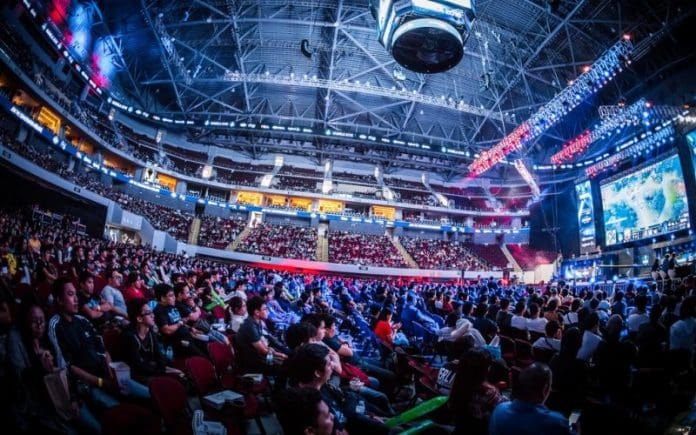

Over the past decade, the esports industry has seen explosive growth throughout the globe, transforming itself from a niche subculture into a mainstream entertainment juggernaut. From the era of legendary titles like CS 1.6 and Dota to contemporary hits like Marvel Rivals and Counter-Strike 2, the world of esports has evolved to such an extent that it now rivals traditional sports both in terms of viewership as well as revenue.
With the rising popularity of esports and video games in general, streaming platforms have also witnessed a tremendous uptick in viewership, especially since the COVID-19 era. In fact, between March 2020 and March 2021, prominent streaming platform Twitch experienced a humongous 80% growth within the span of a year, with viewers spending a total of 1.8 billion hours watching content on the platform in February 2021 compared to 1.1 billion hours in March 2020.
But do these figures accurately represent the state of esports viewership in 2025, or have we finally reached a plateau? With a series of high-profile failures in recent game launches, growing competition from other entertainment mediums, and constantly fluctuating audience preferences, the future of esports looms with uncertainty.
The Rise of Esports
Over the past few years, esports has grown into a billion-dollar industry and is currently more accessible than ever. Gone are the days of local CS 1.6 tournaments in gaming cafés and Halo LAN parties with friends—modern-day esports packs sold-out arenas, boasts multimillion-dollar prize pools, and attracts numerous viewers through global livestreams.
The early 2010s marked a paradigm shift in the world of esports. With blockbuster releases like League of Legends, Dota 2, and CS:GO, esports garnered an unprecedented level of attention from teenagers and young adults across the world. From then on, it was pretty much an uphill ride for the industry, with events like The International setting new milestones with record-breaking prize pools, leagues like the LCS and LCK establishing structured competition, and streaming platforms like Twitch bringing esports to a wider audience.
As a result, it didn’t take long for esports viewership to skyrocket, with the League of Legends World Championship 2019 drawing in a whopping 3.9 million peak concurrent viewers and CS:GO Majors trailing close behind. Mobile gaming also saw tremendous growth towards the late 2010s, with events like Free Fire World Series Rio 2019 clocking in 2 million peak viewers.
With COVID-19 reaching a global scale in March 2020, people were shut inside their homes for months. While it’s undeniable that millions worldwide were adversely affected, the pandemic turned out to be a blessing in disguise for esports as more people than ever turned to online streaming platforms to watch their favorite video game tournaments and content creators, further fueling the growth of websites like Twitch, YouTube, and Facebook Gaming to unprecedented extents.
Are the Numbers Still Growing?
A lot has changed since then—lockdowns have lifted, the world has slowly returned to normalcy, and new esports titles have been popping up left and right. But the big question remains—are the numbers still climbing?
To answer this question, the first thing we have to do is take a look at the recent viewership statistics of esports events, and compare them with the viewership trends from the past years.
Below, we have formulated a table citing the viewership of League of Legends World Championships—one of the biggest esports events—since 2020:
| Tournament | Peak Concurrent Viewers |
| LoL Worlds 2020 | 3.88 million |
| LoL Worlds 2021 | 4.02 million |
| LoL Worlds 2022 | 5.15 million |
| LoL Worlds 2023 | 6.40 million |
| LoL Worlds 2024 | 6.86 million |
Analyzing the data, it’s evident that despite being a sixteen-year-old game, the viewership of League of Legends’ World Championships is on a steady upward trajectory.
But what about the growth in esports audience worldwide?
As per data from Statista, the global esports audience has also seen exponential growth since the start of this decade. While there were approximately 215.2 million global esports enthusiasts in 2020, projections indicate this number will surpass 318 million this year.
These trends suggest that esports viewership has not only climbed since 2020 but also continues to grow, reflecting the increasing popularity of competitive gaming.
The Streaming Economy: Are Esports Fans Flocking to Content Creators?
Content creators are playing a pivotal role in shaping the modern streaming economy. The past few years have seen an increased trend of esports watch parties, where viewers tune into esports tournaments alongside their favorite streamers instead of watching the official broadcast for the event.
In fact, prominent streamers like Mark “ohnePixel” Zimmermann and Tarik “Tarik” Celik drawing in more viewers to their watch parties than the official livestreams of some of the biggest Counter-Strike 2 and Valorant events is also not unheard of.
As a result, a number of top esports pros have made the switch to full-time streaming in recent years. Notably, Tyson “TenZ” Ngo and Tarik, two former Valorant pros, have left their competitive careers behind to pursue content creation.
This sudden shift in esports viewership raises an important debate: Do casual viewers prefer entertainment-driven content over high-intensity esports broadcasts?
Obviously, the answer to this question isn’t quite black and white. While watch parties with your favorite streamers certainly have their appeal, they are no replacement for official tournament broadcasts, which provide esport fans with an immersive viewing experience in addition to in-depth expert analysis.
Watch parties often provide viewers with a more interactive and relaxed environment to watch their favorite teams compete in, but one of the many things that sets official broadcasts apart is the energy and excitement that professional casters bring to the table. From ODPixel’s iconic “CEEEEEEB!” shout during the TI8 grand final to Semmler immortalising Happy’s Deagle ace in DreamHack London 2015, casters have a remarkable ability to transform clutch plays into legendary moments.
It’s pretty safe to say that for most hardcore esports fans, official streams remain the go-to destination for an unmatched, adrenaline-filled viewing experience.
Sponsorships & Revenue
In recent years, a number of esports organizations have disclosed their financial difficulties in sustaining operations. Industry giants like FaZe Clan and Heroic reported massive net losses in 2022, with the former experiencing a net loss of $53.2 million and the latter’s losses exceeding $20 million.
In February 2023, FaZe Clan laid off 20% of its staff. Lee Trink, CEO of the renowned esports org, attributed these layoffs to “uncertainty in the overall economy” and a focus on “financial discipline.”
Thus, the once-booming sponsorship market in esports eventually slowed down due to economic uncertainty and diminishing returns on investment.
Early 2023 also saw some big names like BMW pulling away from esports sponsorships, which further fueled concerns about more non-endemic brands following suit. However, industry staples like Red Bull, Logitech, and Intel stayed and adapted to the changing landscape, continuing their investment in esports events.
Moreover, new revenue streams also emerged in the industry, with Saudi Arabia’s controversial yet substantial investment in esports funding teams alongside massive tournaments like Riyadh Masters, which feature gigantic prize pools.
But what about the prize pools for official events?
Are Tournament Prize Pools Dropping?
As mentioned earlier, The International is the biggest annual Dota 2 tournament, and it’s organized by Valve themselves. The event, which has set multiple prize pool milestones in the past, has been seeing a steadily declining prize pool for the past few years.
For instance, the total prize pool of The International 2024 was approximately $2.75 million USD, which falls pale in comparison to the humongous $40 million USD prize pool of The International 2021. To this day, TI10 holds the world record for the largest prize pool in esports history, with no other event coming close.
While the shrinking prize pool of TI might seem like an alarming statistic at first glance, taking a closer look reveals that it might not be a cause of concern at all.
The prize pool of The International events is primarily crowdfunded, with 25% of the sales of the in-game Battle Pass contributing directly to the total winnings. In 2023, Valve announced the removal of the traditional Battle Passes from Dota 2 in order to shift their focus to more content-focused and year-round updates. As a result, Battle Passes were replaced by a Compendium that focused on celebrating TI itself alongside its participating teams and players.
The lack of cosmetics in the Compendium led to a drastic drop in the TI prize pool, but it also gave the Dota 2 community some amazing updates like Crownfall, Wandering Waters, and more.
On the other hand, the prize pool for Worlds—the biggest annual League of Legends tournament— has remained relatively consistent since 2021, maintaining a total of $2,225,000 USD each year.
Notably, Valorant Champions, the largest tournament for Riot Games’ flagship FPS, has seen a significant increase in its prize pool compared to its initial years. While Champions 2021 and 2022 had a prize pool of $1 million USD each, Champions 2023 and 2024 saw the total winnings jump to a whopping $2.25 million USD.
Is Esports Still the Next Big Thing?
Now that we’ve taken the time to try and analyse the current state of esports and its overall viewership, it might be a good time to ask: What does the future of esports look like?
While making an accurate prediction about the future of esports at a time when the industry is experiencing rapid shifts in trends can certainly be challenging, studying the data of the past few years certainly provides us with several key takeaways.
For starters, the surge in popularity of mobile esports suggests that accessibility and affordability are playing a major role in the industry’s growth. Titles like PUBG Mobile, Mobile Legends: Bang Bang, and Free Fire have become juggernauts in the esports industry, proving that competitive gaming is no longer confined to PCs and consoles. After all, it’s not hard to see the charm in being able to play your favorite games on the go without having to shed a thousand bucks on a brand-new gaming PC every few years.
While the growth of mobile esports has been nothing short of commendable, traditional esports still remain the dominant force in the industry. Tournaments like Dota 2’s The International, LoL Worlds, Valorant Champions, and CS2 Majors continue to draw in millions of online viewers, attract thousands of passionate fans to live arenas, and set the stage for some of the most electrifying moments in esports history.
With video game companies continuing to fine-tune existing esports titles while simultaneously shipping out modern masterpieces like Deadlock and Marvel Rivals, the future of esports looks brighter than ever, and plenty of fresh opportunities await for teams, players, and viewers alike.
