

Counter-Strike has always been a game that is known for its simplicity. Unlike most other titles in the FPS genre, which are characterized by complex abilities, weapon mechanics, and tons of visual noise, CS has set itself apart through its purity and sticking true to its fundamentals. In the virtual battlefields of CS, you won’t find your enemies soaring in the skies or using supernatural abilities to change the playing field, but rather players relying solely on raw aim and game sense to outplay you.
Guns and utility are the only things that you get to work with to prove your worth in CS, while skill and strategy are the only real power-ups you get. Every duel, every rotation, and every smoke thrown carries weight, and a single failed counter-strafe is often enough to turn the tide of an entire round.
However, CS is a game with more than two decades of history, and with that longevity comes constant evolution. Over the past few years, and especially since the release of CS2, we have seen fundamentals like raw aim and mechanical skill taking a bit of a backseat as pro teams continue to come up with incredibly complex tactics to get the upper hand against their opponents.
This leads us to the question: are these complicated and fancy tactics adopted by pro teams in the big stages slowly taking away Counter-Strike’s soul?
What Made Counter-Strike Iconic
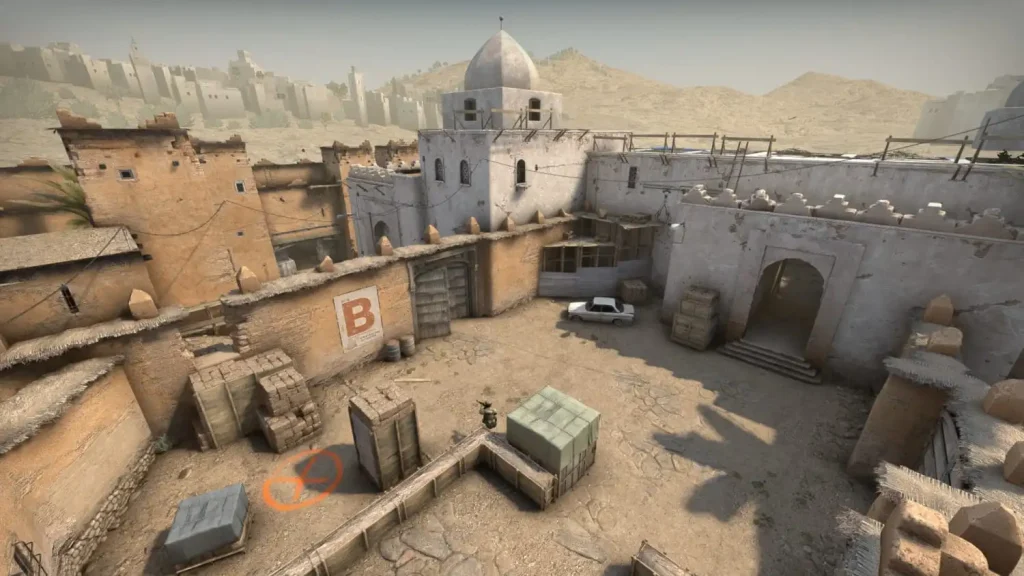
To understand what gave Counter-Strike its status as the greatest tactical FPS of all time, we have to go back to the early days of the franchise, all the way to CS 1.6.
To call CS 1.6 the godfather of modern esports wouldn’t be a statement far from the truth. Not only was the title a household name among gamers throughout the world, but it was also one of the first games to attain global recognition as an “esport” during the mid-2000s era. Apart from official events, CS 1.6 also saw thousands of unofficial tournaments being organized in gaming cafés across the globe.
CS 1.6 was never defined by elaborate tactics; it thrived on fundamentals instead. Sure, there were utilities like grenades, flashes, and smokes, but the concept of meticulously practiced lineups was rare. At its core, gunfights boiled down to raw mechanical skill and mastery of the basics. Coordination between teammates was still required, but you’d never witness five players standing with smokes out, rehearsing lineups before an execute, a sight that’s common in modern CS even outside the pro scene and high-ranked pubs.
This simplicity gave CS its charm and helped evolve the title into what it is today. From an outsider’s perspective, the game never felt intimidating, and the learning curve didn’t seem nearly as sharp as it does today.
The Modern Shift
The last decade has seen this fundamental and mechanics-heavy playstyle of Counter-Strike experiencing a significant shift. Over the past few years, and especially since the release of CS2, players have placed a much greater emphasis on tactics and utility usage over raw mechanical skill.
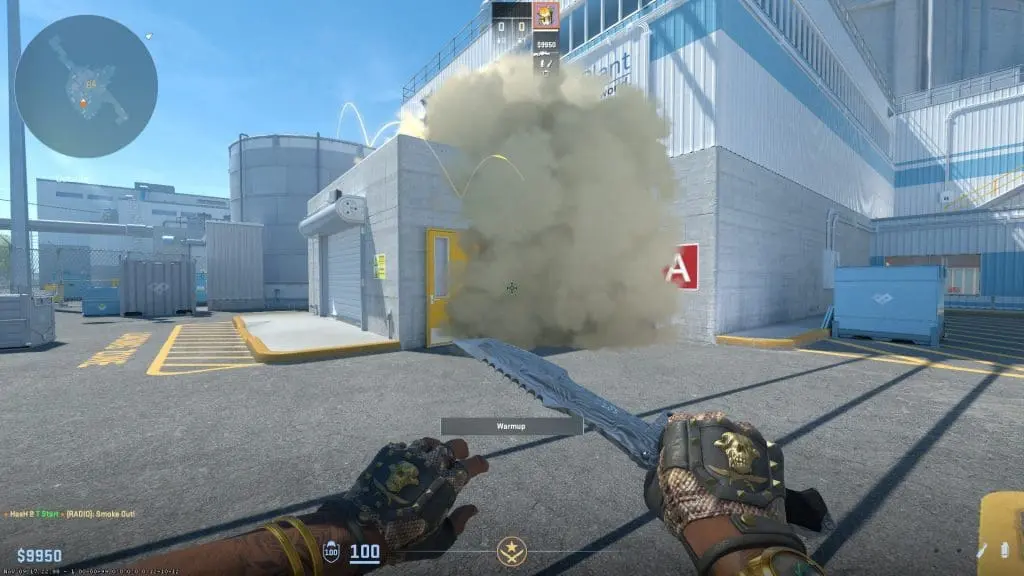
With the release of Counter-Strike 2 in September 2023, Valve added volumetric smokes to the shooter alongside improved overall grenade physics that enable players to see through smokes by placing a nade at the right spot. These are undoubtedly some of the best additions that the franchise has seen in a long time, but they have also raised the game’s skill ceiling dramatically.
Players have started creating nade lineups for common AWPing spots like the Mirage Window that are usually smoked off, and while they are a delight to watch from a spectator’s perspective, they can be equally as intimidating for newer players.
This isn’t to say that aim and mechanical mastery have become nonexistent due to the changes. In fact, CS2 is still one of the few titles that don’t shy away from rewarding precision and consistency. However, it’s a game that’s starting to demand a lot more than sharp aim; it needs preparation, proper utility placement, and an understanding of team roles, among other things.
The Argument for Fancy Tactics
A good chunk of the CS2 player base believes that these fancy tactics might be a positive step forward for CS, and it isn’t hard to see why. Not only do they add even more depth to the game and keep it constantly evolving, but they also reward creativity and enable players with weaker mechanical mastery to shine in other ways.
The elevation of the overall skill ceiling in CS2, driven by increasingly complex tactics and utility usage, can also be seen as a welcome shift for the game, as it challenges players to continually refine their skills and push the boundaries of mastery.
These changes also breathe new life into a game that has continued to thrive for over two decades. For many, these changes can be a sign that CS is still evolving to this day without losing its competitive essence.
The Counterpoint
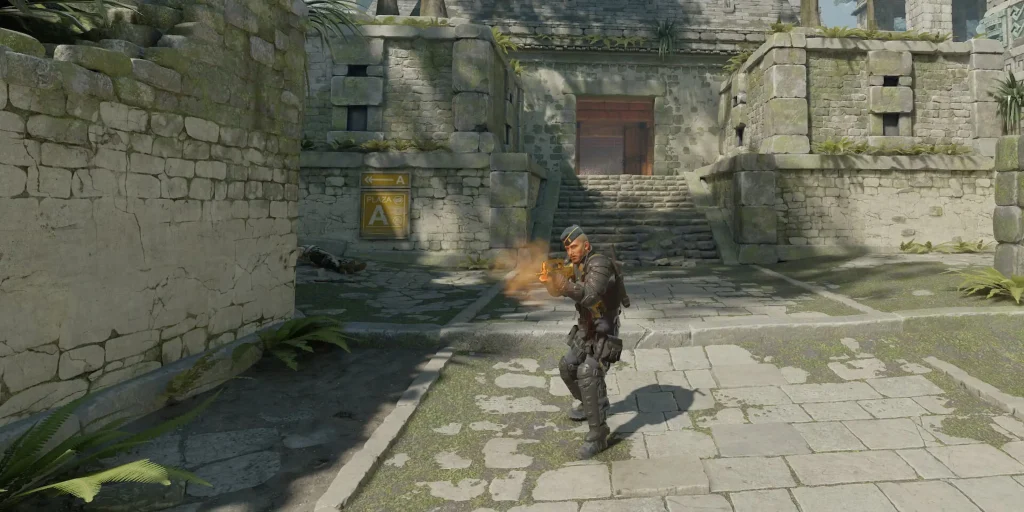
With that being said, it’s also true that over-engineering CS can end up taking the soul away from the game. The “pick up and play” nature of CS, which helped the game’s earlier versions evolve into what it is today, is slowly transforming into a system where rehearsed executes and complex strategies reign supreme.
This can not only alienate casual players who aren’t willing to put hundreds of hours into learning a video game, but it can also act as a barrier that discourages new players from even stepping into the game.
The heart of CS has always been in the raw aim duels, the split-second decisions, and mastery over the fundamentals. When games start feeling like they’re won or lost in the strat book before the first shot is even fired, that essence risks fading away. Strategy is undoubtedly a crucial part of any tactical FPS, but it should complement mechanical skills instead of replacing them. The magic of CS has always been the perfect harmony of brains and bullets. If one begins to outweigh the other, it can slowly start scraping away the game’s soul.
Finding the Balance
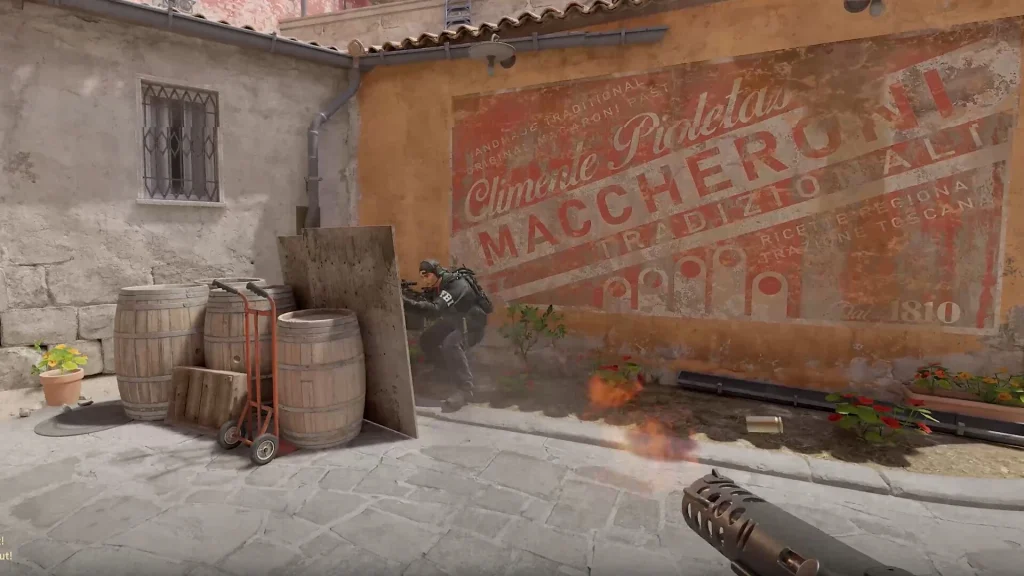
Finding the right balance between fundamentals and tactics will be the key to keeping CS accessible for newcomers while also making the game rewarding for its dedicated player base. However, it can be an extremely slippery slope.
In a game like CS, the meta should reward mechanics first, and tactics second, not the other way around.
At the end of the day, what truly matters is maintaining a sense of fairness and clarity in every match. Players should feel that victory comes from decisions made in the moment, not from memorizing playbooks or out-prepping the enemy team. When the game remains intuitive yet deep, it can satisfy both ends of the spectrum.
Verdict
As mentioned earlier, Counter-Strike is easily the biggest tactical shooter title of all time in terms of player count, and the primary reason behind its dominance in the genre lies in its simplicity. Take someone who has never played an FPS before, sit them down in front of a CS2 event, and chances are they’ll understand the basics within a few rounds. The same can’t be said for most other games in the genre, many of which can feel overwhelming even to seasoned veterans, let alone complete newcomers
For the same reason, CS2, bringing in a new era of complicated tactics and ever-increasing layers of strategy, can do the game more harm than good in the long run. There’s little doubt that these changes bring freshness and depth to the game, but they also risk turning matches into exercises in memorization. Strategy and preparation should never overshadow the spontaneity of gunfights that have defined Counter-Strike for well over two decades.
If Valve can strike the right balance, it’s safe to say that CS2 will continue its dominance in the competitive FPS space for years, if not decades, to come. The game’s soul has never been in its utility, but in the duels and the tension of every round. That is the magic CS must never lose.